
How to Teach Finding Common Denominators (Without Confusing Your Students)
Finding common denominators is one of those skills that should be straightforward… but somehow turns into confusion fast.
Students mix up steps.
They guess at denominators.
They forget what to do halfway through.
And if we’re being honest, this is usually where fractions start to fall apart for a lot of students.
If you’ve been searching for a better way to teach finding common denominators, especially using the least common multiple (LCM), this approach will make things much clearer for your students.
The good news? It doesn’t have to be complicated.
When students learn a clear, repeatable process (and understand what they’re doing), finding common denominators becomes so much easier to teach – and to learn.
Teach Common Denominators Using LCM (Step-by-Step)
One of the biggest reasons students struggle with common denominators is because they don’t have a consistent strategy.
They might:
Try to guess a denominator
Multiply randomly
Or skip steps altogether
Instead, teach this as a simple, repeatable process:
List the multiples of each denominator
Find the least common multiple (LCM)
Rewrite each fraction using the new denominator
This gives students a method they can rely on every time.
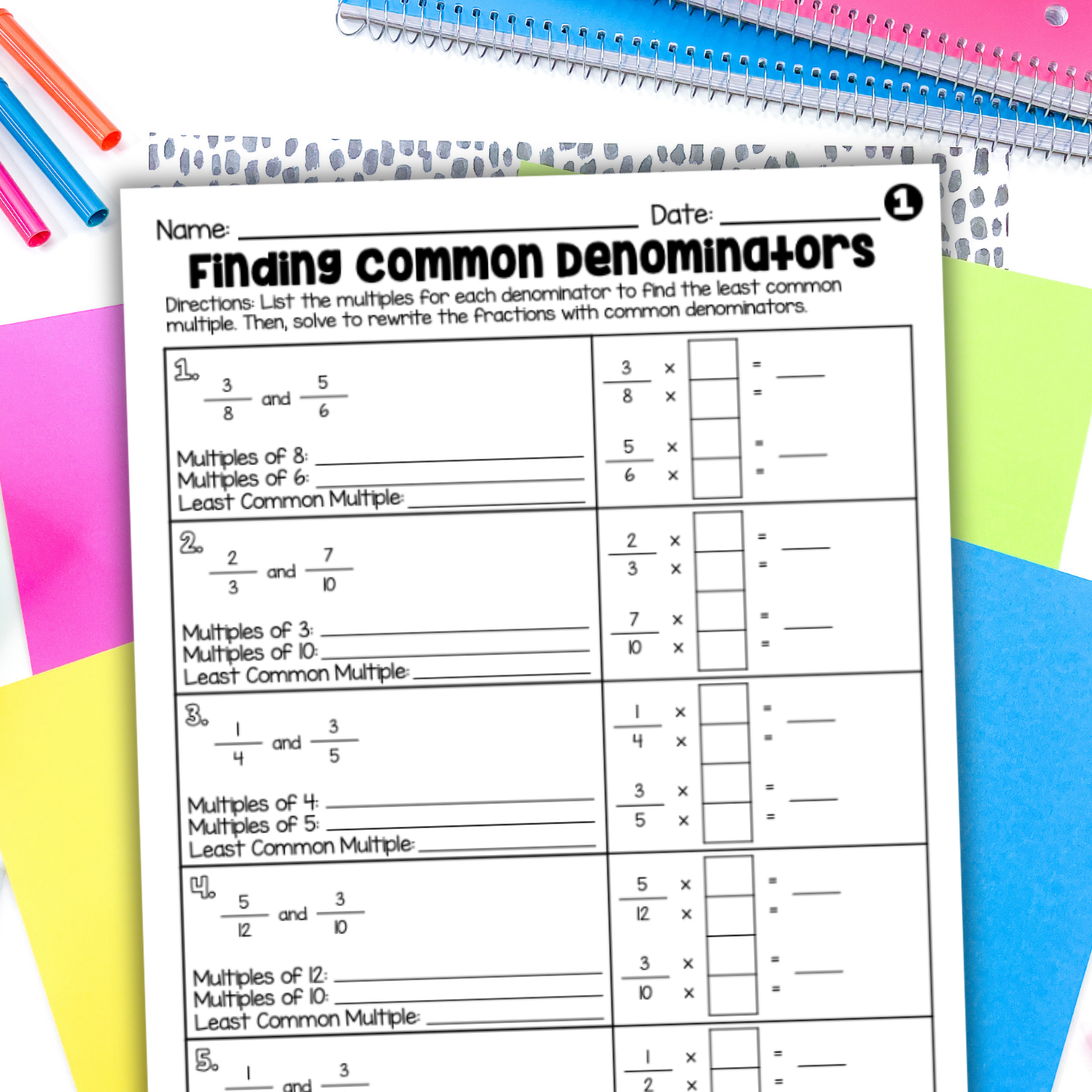
This is exactly how my finding common denominators worksheets are designed.
Students list multiples, identify the least common denominator, and rewrite fractions step by step.
Why Listing Multiples First Matters
When students are first learning how to find common denominators, listing multiples is key.
It helps them:
stay organized
avoid mistakes
understand what the least common multiple actually represents
Over time, students will become faster – but this step is what builds real understanding.
Then Connect It to Simplifying Fractions Using GCF
Once students are comfortable with LCM and common denominators, it’s the perfect time to introduce simplifying fractions using the greatest common factor (GCF).
This is where students often get confused again – because now they’re working with:
factors
greatest common factor
reducing fractions
But just like before, this skill becomes much easier when it follows a clear process.
Teach Simplifying Fractions Step by Step
Use a consistent method:
List the factors of the numerator
List the factors of the denominator
Find the greatest common factor (GCF)
Divide both numbers by the GCF
Rewrite the fraction in simplest form
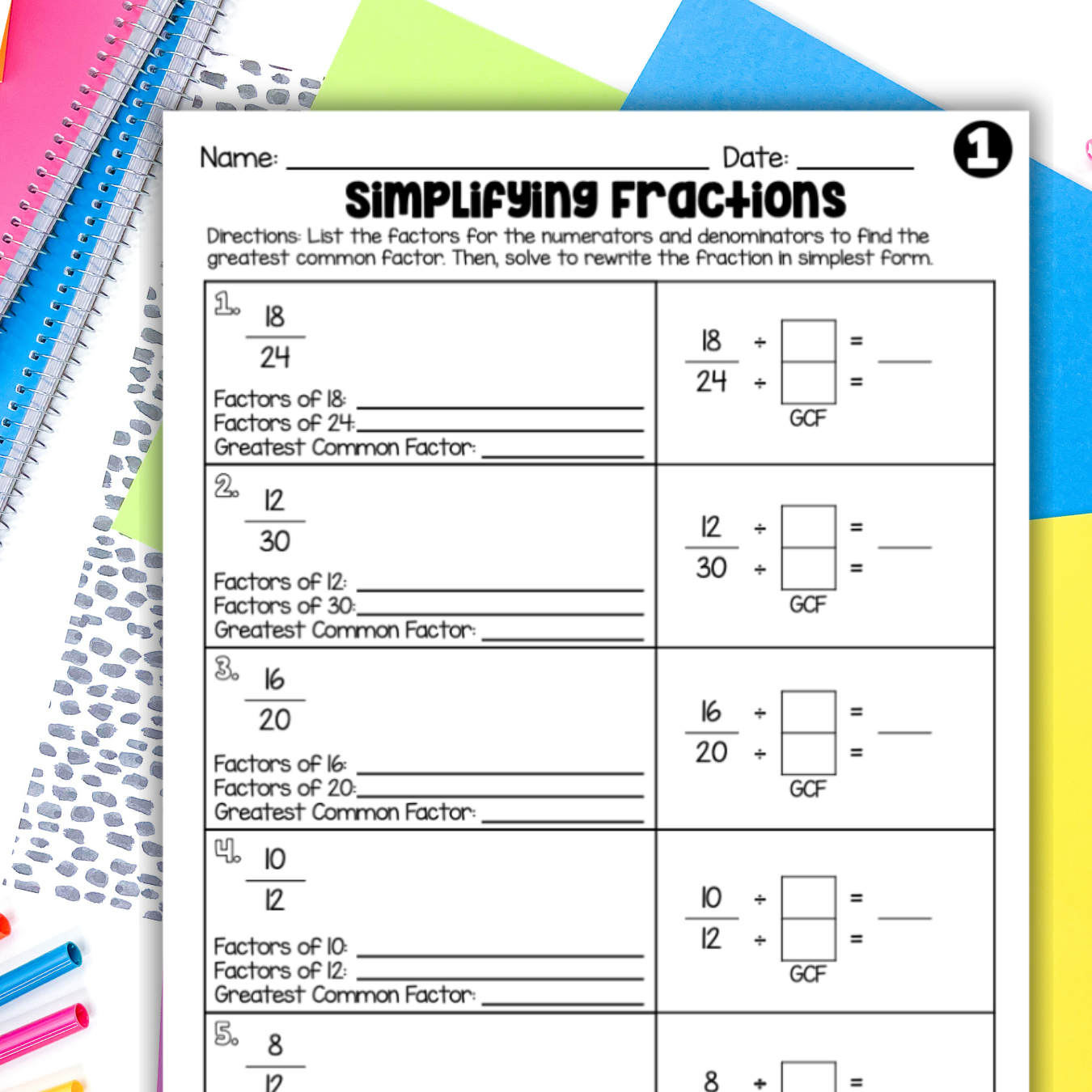
My simplifying fractions worksheets follow this exact structure, helping students practice simplifying fractions step by step instead of guessing.
Give Students a Factors & Multiples Reference (That They’ll Actually Use)
Even when students understand the steps, they often get stuck on one simple thing:
They don’t know their factors or multiples fluently yet.
That’s where a reference tool can make a huge difference.
Instead of stopping every time to figure out:
“What are the multiples of 6 again?”
“What factors does 12 have?”
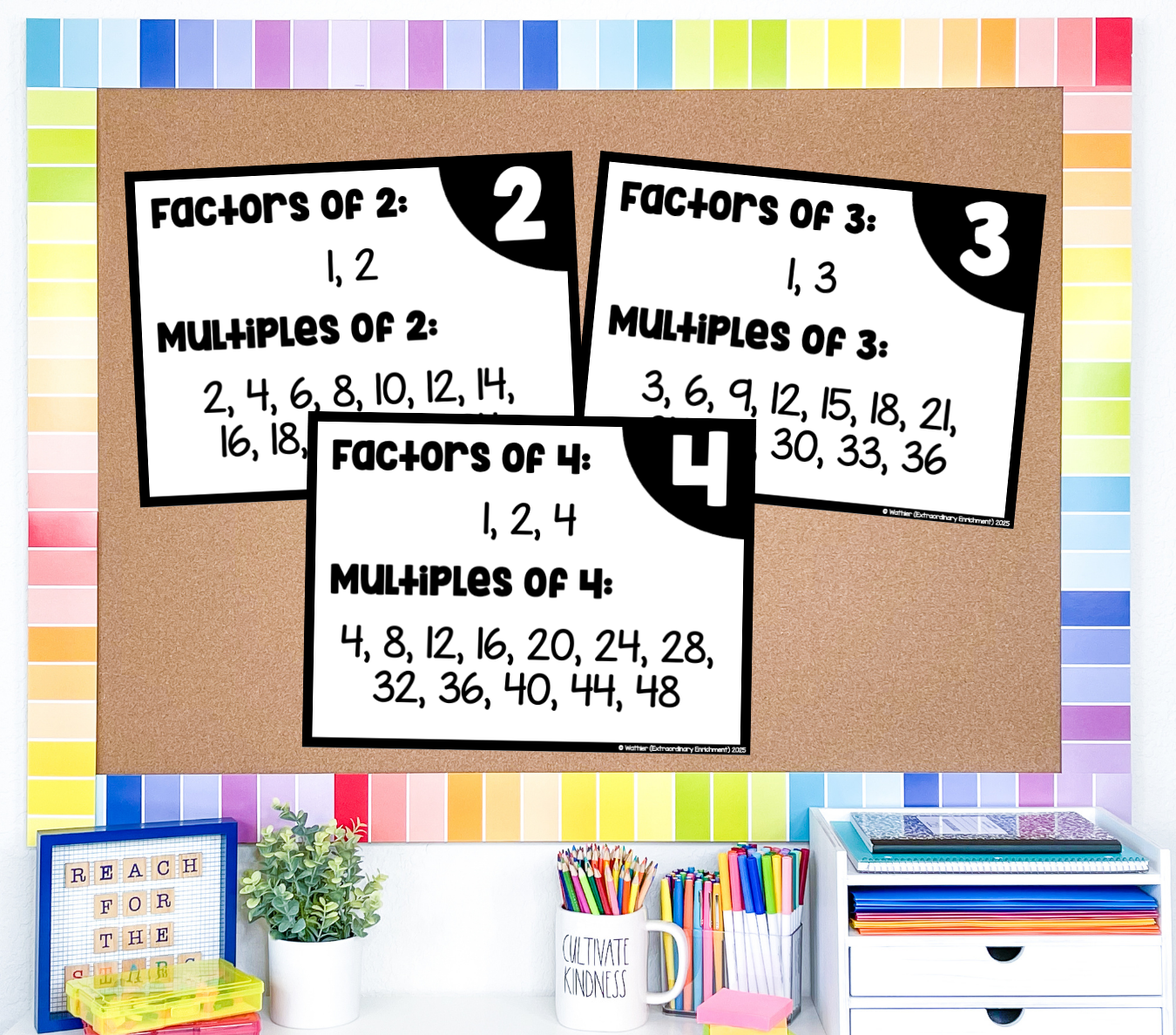
Students can use a factors and multiples reference chart to quickly find what they need and keep moving.
This helps students:
stay focused on the process
work more independently
build confidence without getting stuck
My anchor charts and interactive mini booklets give students a ready-to-use list of factors and multiples for numbers 1–12, so they’re not slowed down by basic recall.
It seems small, but this support makes a big difference, especially during independent practice.
Here’s a Simple Way to Teach This
If you want to make this easier for your students (and yourself), try keeping it simple and consistent.
Start with:
Teaching how to list multiples to find common denominators
Giving students plenty of structured practice using LCM
Then build into:
Listing factors to simplify fractions using GCF
Reinforcing the difference between the two skills
Along the way, it helps to give students a reference for factors and multiples so they’re not getting stuck on basic recall.
When students have a clear process and the support to follow it, fractions become much less overwhelming – and a lot more manageable to teach.
Ready to Use Support
Common denominator practice with LCM
Simplifying fractions with GCF
A clear reference for factors and multiples
Make this whole process feel much more manageable – for both you and your students.
Get the bundle of these resources for a simple, consistent approach!
