
How to Teach Area of Irregular Shapes (Without Confusing Your Students)
Teaching area of irregular shapes can feel frustrating – for you and your students.
They understand the area of rectangles… but the moment a shape looks different (or a side length is missing), everything falls apart.
If that sounds familiar, you’re not alone.
In most cases, students don’t struggle because the math is too hard, they struggle because they’re missing a clear strategy.
Once you simplify the process and make it visual, this skill becomes so much more manageable.
Start with Rectangles – Then Break Apart the Shape
Before jumping into irregular shapes, make sure students are confident with rectangles.
They should understand:
- Length × width
- What area actually represents
- How to work with square units
This is where having solid area of rectangles practice makes a big difference. When students are confident here, everything else becomes easier.
From there, introduce irregular shapes as something less intimidating:
It’s just rectangles put together.
Teach students to:
- Draw lines to break the shape into rectangles
- Find the area of each part
- Add the total
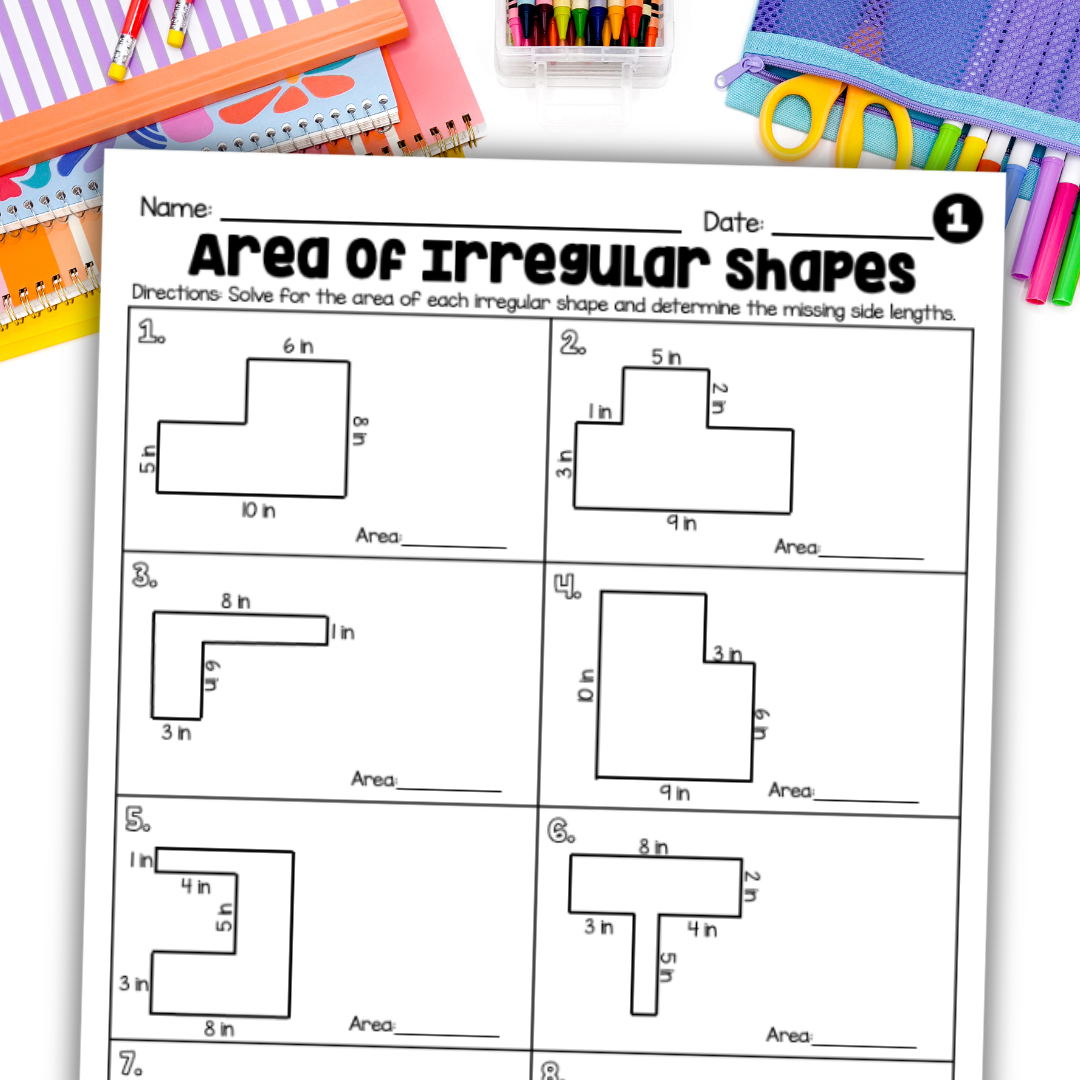
This is exactly how my area of irregular shapes worksheets are structured.
Students practice breaking apart shapes step-by-step to find the area of combined rectangles.
Teach Missing Side Lengths (This Is Where Students Get Stuck)
For many students, the real struggle isn’t breaking apart the shape – it’s figuring out the missing side lengths.
This is where confusion (and guessing) tends to happen.
Instead of leaving this as an afterthought, teach it directly.
Help students understand:
- Side lengths connect across the shape
- Missing pieces can be found by subtracting known lengths
- They need to look at the whole shape, not just one part
Make This Visible + Repeatable
Students do much better when they have a clear process to follow.
Encourage them to:
- Label all known side lengths first
- Identify what’s missing
- Use subtraction to find unknown sides before solving area
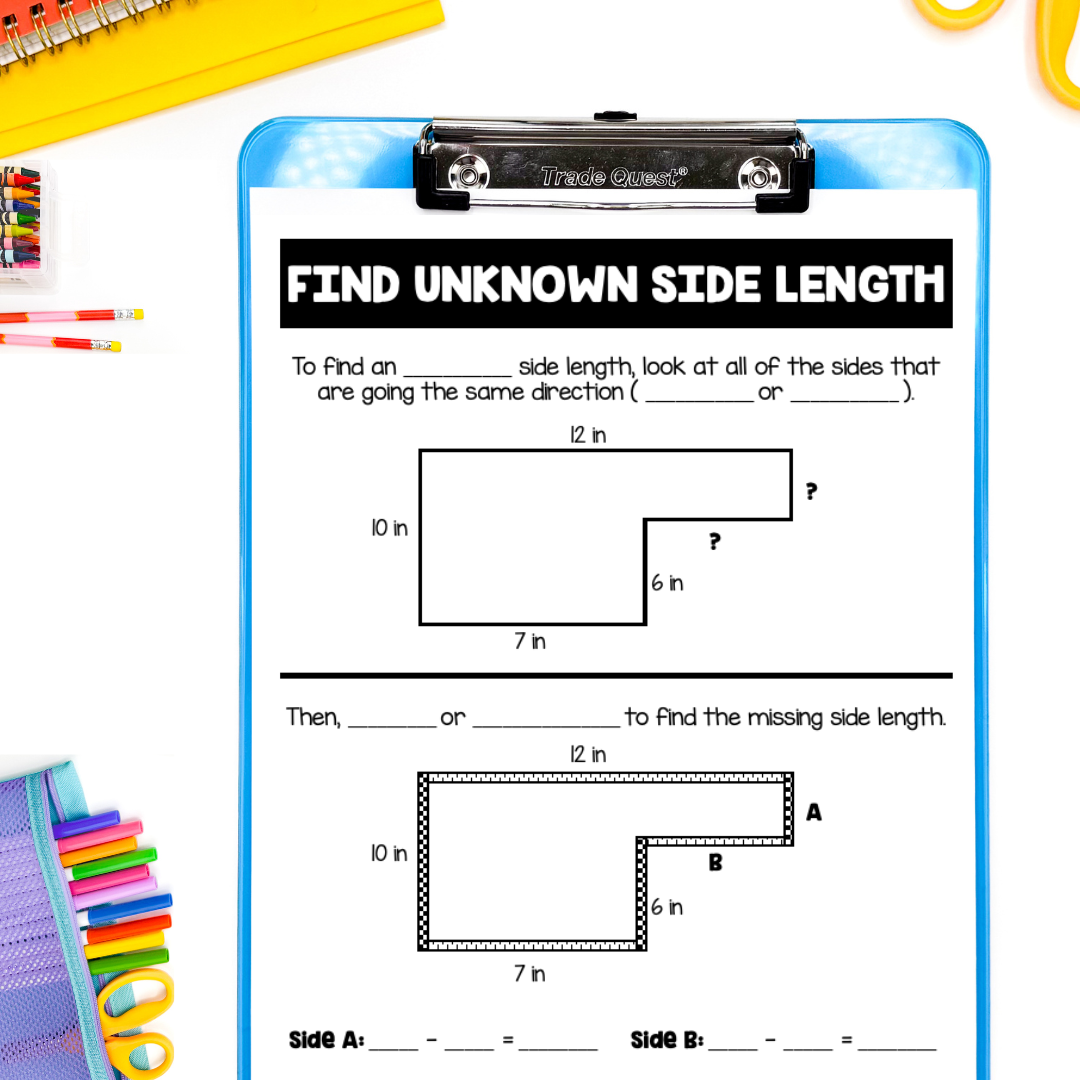
This is where area & perimeter anchor charts come in.
Having a visual reminder of how to find missing sides helps students stay independent and confident.
Use Visual Support + Structured Practice to Make It Stick
Once students understand the strategy, they need consistent, structured practice.
This is what helps them move from:
“I kind of get it…” to “I can do this on my own.”
Look for practice that:
- Starts simple
- Builds gradually
- Encourages students to show their thinking
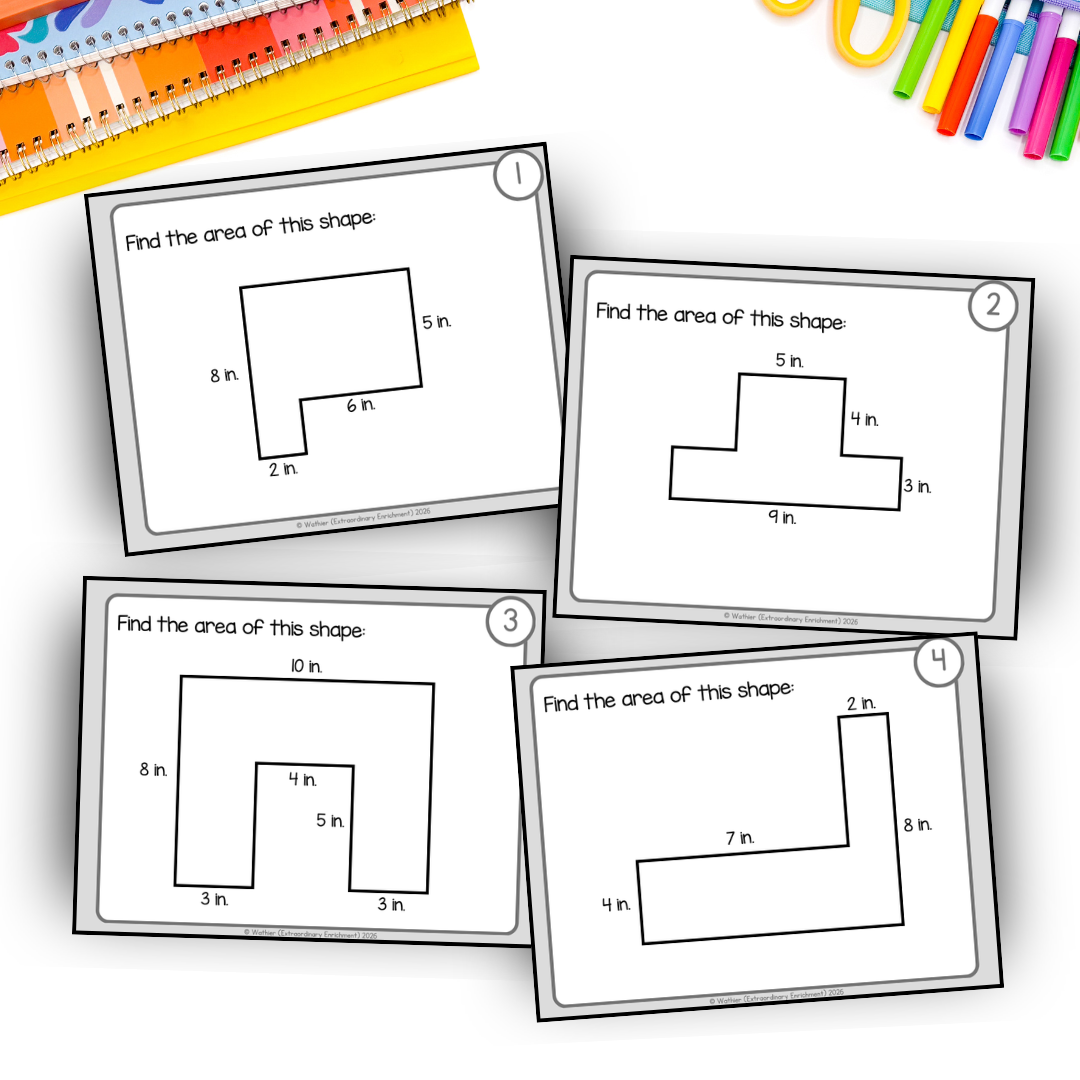
Use my free area of irregular shapes task cards for quick, engaging practice without extra prep.
They’re perfect for:
- Math centers
- Review activity
- Early finishers
And Suddenly… It Clicks
If area of irregular shapes feels overwhelming, it usually comes down to a few key pieces:
- Students need a strong rectangle foundation
- They need a clear strategy for breaking apart shapes
- They need support with missing side lengths
Once those pieces are in place, this topic becomes much easier to teach and understand.
Here’s a Quick Game Plan
If you want a simple way to implement this in your classroom:
1. Build confidence with area of rectangles practice
2. Move into area of irregular shapes worksheets
3. Support students with area & perimeter anchor charts
4. Reinforce with task cards for extra practice
Grab your free area of irregular shapes task cards to get started right away.
Or get the bundle of these resources together for a complete, consistent approach.
